



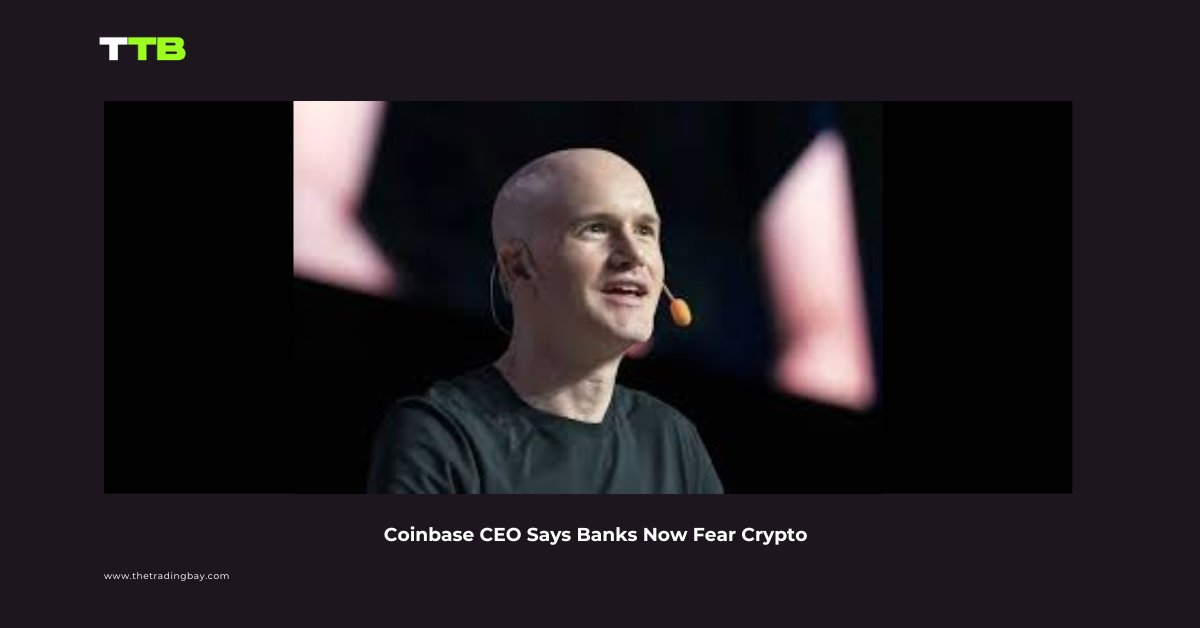
Brian Armstrong, CEO of Coinbase, recently stated that major banking institutions now perceive cryptocurrencies as an “existential threat” to their operations. This bold assertion underscores a significant shift in attitudes within the financial sector, as banks traditionally viewed cryptocurrencies as niche products or speculative assets. Armstrong’s comments align with ongoing developments in regulation, technology, and investor sentiment, indicating a deeper integration of digital currencies into the financial system.
According to industry reports, traditional banks are recognizing that cryptocurrencies and blockchain technology could disrupt their business models. The global cryptocurrency market has surged in recent months, with a market capitalization exceeding $1 trillion, representing a 70% increase from its lows in early 2023. This growth is prompting banks to reassess their strategies as crypto usage becomes more mainstream.
Armstrong pointed to several factors contributing to this fear among banks. One major concern is the rise of decentralized finance (DeFi) platforms, which enable users to engage in financial transactions without traditional intermediaries. Recent research from the Financial Stability Board indicates that DeFi has the potential to account for a significant portion of global financial transactions in the coming years. As a result, banks that fail to adapt may find themselves outpaced by more agile competitors.
The increasing adoption of cryptocurrencies by institutional investors is another factor heightening banks’ anxieties. A recent report from Fidelity Investments revealed that 52% of institutional investors in the United States have invested in digital assets. This growing interest is reshaping market dynamics as hedge funds and asset managers begin to allocate more funds towards cryptocurrencies.
Moreover, regulatory pressures are intensifying as governments worldwide look to implement frameworks for cryptocurrency trading and usage. The European Union is advancing legislation aimed at improving oversight of digital assets, while the U.S. Securities and Exchange Commission has indicated that it plans to tighten regulations around cryptocurrency exchanges. These developments force banks to reconsider their roles in a rapidly evolving landscape.
Meanwhile, the competitive landscape is shifting as fintech companies and cryptocurrency exchanges enhance their offerings. For instance, platforms like Binance and Kraken are increasingly providing banking-like services, including lending, savings, and payment solutions, which previously fell squarely within traditional banking. The advent of these services raises the stakes for banks, pushing them to innovate or risk losing market share.
The concerns raised by Armstrong and echoed by industry analysts point to a broader trend where digital assets are becoming a fundamental part of the economic ecosystem. In Canada, for example, major banks have started exploring cryptocurrency products, recognizing the potential for new revenue streams. Such initiatives highlight the urgency for financial institutions to embrace digital currencies rather than dismiss them.
Looking ahead, the implications of this paradigm shift are profound. As banks view cryptocurrencies as competition, we may see them accelerating their digital transformation efforts. Increased investment in blockchain technology could occur, leading to efficiencies and cost savings in existing operations. Additionally, banks may forge partnerships with cryptocurrency providers to offer hybrid services, effectively positioning themselves to capitalize on the burgeoning sector.
In conclusion, the perception of cryptocurrencies as an existential threat by major banks highlights a crucial inflection point in finance. With the market capitalization of digital assets climbing and institutional acceptance growing, traditional financial institutions must adapt to maintain relevance. The future landscape will likely witness a blend of traditional finance and digital assets, setting the stage for further innovation and potential disruptions in the global economy.